I Have Found It

I watched and enjoyed a few episodes of the television show Eureka during its first season.

But, now that my not-quite-so-reasonable little brother is involved with it (Season 4), I’m watching it again and enjoying it even more.

Check it out! And, if you like it, spread the word.

Who’s Your God?

I really liked the Gene Healy (author of The Cult of the Presidency, check out a shorter Reason/Cato article here) op-ed BP oil spill: Who’s your daddy?. In it, Healy returns to that theme: criticizing the public for their “Juvenile expectation that there’s a presidential solution to everything from natural disasters to spiritual malaise.”

He characterizes the ridiculous cries for presidential trips to the area and shows of concern as:

If only Obama would manifest himself at the afflicted area, shed his aura of cool reserve, and exercise the magical powers of presidential concern, perhaps the slick would recede.

He’s right. This reaction is silly, and the tendency to grant the president more and more power in the belief that with it he can fix any problem is dangerous.

But, I think the problem is deeper than just president-worship. I think that is just an instance of a wider tendency to have faith in the power of coercive leadership to solve any problem.

Primitive people, when faced with a phenomenon that they couldn’t control or understand, concluded that it must be under the control of a more powerful entity that could control the phenomenon at its whim. It must be somebody’s intention, and somebody must be to blame. They had trouble accepting that it was just a natural effect of mindless forces that they didn’t presently understand.

Similarly, many people today assume that if there’s a problem in people’s lives, it must be under the control of the rich and powerful and it can and should be solved by political leaders. Economic problems: More government action and better regulation. Energy problems: More government action and better regulation. Environmental threats? Poverty? Health care? Education? Retirement security? Addiction? Dirty words?… The same prescription.

Many people who scoff at organized religion, have merely shifted their faith to the state (or, at least they faithfully blame the rich and powerful for most problems). They’re true believers, and every incident will only serve to strengthen that belief.

If there’s an economic panic in an area where there was lots of government involvement and heavy regulation, it’s seen as evidence that rich private people are to blame and what we need is more government involvement and more regulation. If there’s an oil spill, and there’s evidence of incompetent regulation, it means that rich people caused it because they don’t really care about safety or the environment and we need more regulation.

I understand that it isn’t satisfying to accept that the government can’t fix the economy, or oil spills, or nature, if only we’d give them more money and power…

But, it’s true anyway.

And, if you really want to improve the world, you’ll be more likely to make progress if you work from the truth than from satisfying myths.

Changing Poverty

Don’t know much about poverty.

I’ve never had to live in poverty, nor spent much time around desperately poor people. So, I’m certainly no expert about what it means or is like.

I know it makes me sad to contemplate people who are unable (or barely able) to obtain minimal standards of nutrition, shelter, sanitation, health, etc. I would very much like all people to meet these needs easily, and have time and resources to pursue other projects and goals. So, as for poverty, I’m willing to go out on a limb and take a strong stand against it.

My impression is that there are still many people living in this kind of poverty around the world (although that has been improving steadily), and very few in the United States. As wealth grows, I expect this trend to continue, and (with the exception of cleptocracies that make it impossible for aid to reach the people and for the people to create and keep wealth) poverty will approach zero.

But, some people don’t agree with my impression, that poverty is an absolute situation that has been decreasing. They see it as a condition that can be defined in terms of relative economic success, and think we’ll always have a great deal of poverty as long as we have inequality of economic results.

Lately, I’ve been seeing references to a new measure of poverty from the Obama administration (for example, here, here, and here). I didn’t see a direct link to a description of the measure, but I think it’s the one described here. The current measurement is along the lines of triple the amount required to buy adequate food (adjusted for family size), while the new measure is tied to the spending on food, clothing, shelter, and utilities by those at the 33rd percentile in such spending. It may be that this is indeed just another indicator rather than a replacement for purposes of benefit calculation, but I tend to agree with some of the critics that it indicates an unfortunate aspect of the administration’s ideology.

As Robert Samuelson writes:

What produces this outcome is a different view of poverty. The  present concept is an absolute one: The poverty threshold reflects the amount estimated to meet basic needs. By contrast, the supplemental measure embraces a relative notion of poverty: People are automatically poor if they’re a given distance from the top, even if their incomes are increasing. The idea is that they suffer psychological deprivation by being far outside the mainstream. The math of this relative definition makes it hard for people at the bottom ever to escape “poverty.”

This isn’t anything like my intuitive idea of poverty. This is imbuing the definition of poverty with an egalitarian slant, that makes it more of a measure of inequality than one of poverty. Even if everybody were ten times as wealthy tomorrow morning, this definition of poverty would still include many people who live better than kings did a few hundred years ago. Egalitarians would like the distribution of wealth to be something closer to what I like to think of as the kindergarten model: where everybody shares everything, and nobody has a lot while somebody else has much less. But, I think reaching this outcome requires using force to change what would otherwise be the natural outcome of people exercising their choices freely. So, rather than enhancing justice, I think it would violate justice.

Also, I think this captures the guilt of some of the better off more than it captures the perceived poverty of the less well off. Because, many of those who meet the current definition of poverty in the US are Hispanic immigrants. I think it’s usually better to judge people’s opinions by their actions rather than their words. As Don Boudreaux notes:

If being relatively poor were truly a devastating psychological experience for most people, Hispanics would remain in Latin America instead of immigrating to – and remaining in – the United States  here, in their relative poverty here, they are “far outside the mainstream.”

This pattern of immigration counsels skepticism of those who assert that people care so overwhelmingly about their relative economic positions that the typical poor person would prefer that the rich be made poorer today rather than the poor have access to opportunities to grow rich tomorrow.

I don’t think that wealth outcomes of market activity are unequal because some people are stealing from others (for the most part). They’re unequal because people’s capabilities and preferences are different. Some people are more productive or are willing to devote more of their time and energies to their careers and seek to maximize their wealth. Others prefer simpler lifestyles and would rather spend most of their time pursuing other projects (e.g., art, charity, learning, open source projects, family activity, etc.). You may disagree with the choices, or dislike the outcome. If so, you’re welcome to offer your advice or contribute your own wealth to those who are worse off economically and to urge others to do likewise. But, if you impose coercion to equalize the results I don’t think what you’re doing is righting a wrong. I think you’re doing wrong.

A war on this new kind of poverty is more of a war on human nature, freedom, and arithmetic.

I’m against it.

More Perspective

I realized that my previous post may have left the impression that I thought that every decision should be determined by whether the benefits outweigh the costs of each individual act.

I don’t.

For example, it’s possible that a policy against appeasing extortionists will lead to better outcomes in the long run, even if it imposes greater costs than benefits in individual instances of its application. Likewise, I think we all benefit if many people are willing to impose costs on others (bigots, liars, etc.) who are guilty of despicable behavior even though they (the imposers) may absorb some extra costs themselves while doing so. It’s good that people choose not to associate or do business with people or companies that have horrible behaviors and policies, because that tends to deter those sorts of behaviors and policies. I don’t want coercive legislation against non-coercive bad behavior, but I’m happy that many people peacefully enforce standards of decency through social pressure. Sometimes this enforcement has immediate costs that exceed immediate benefits.

And, I’m sure that people who support the San Jose State University ban on blood drives (while the restriction against gay men donating is in effect) believe that they are engaging in just such a worthy endeavor. They think that the principle of opposing the irrational discrimination against homosexuals is so important that it should be fought whenever possible, irrespective (or almost irrespective) of the immediate costs.

But, of course, I don’t agree with that last part.

For one thing, the degree of the costs imposed does matter, and that’s where the sense of perspective comes in. If all that you can reasonably expect from your protest is that some people will say “right on,” some people will die, and a tiny chance that the pressure of the publicity and effects of the protest (and potential copycat protests) will trickle up to those in a position to change the offending policy and will cause them to actually change the policy, then I don’t think that this particular protest is worthwhile. The expected costs are too much higher than the expected benefits.

There are a few other relevant points in this case.

One is that the offending ban doesn’t impose serious costs on homosexuals. It denies them the opportunity to donate blood (something that many others would consider a cost worth paying to avoid). It doesn’t deny them blood. I’m sure it feels bad to have your generosity refused in this way, but it’s not as if the policy is intended to harm homosexuals, or to deny them a basic right. It’s a bureaucracy being overly cautious, and there are better ways to criticize it.

Another important aspect of this case is that the people actually harmed by the protest are not those who are guilty of the perceived offense, but people in need of a blood transfusion (who may be homosexuals) but can’t get one because some university students, teachers, and administrators wanted to make a symbolic point about discrimination. The pressure on those who are in a position to revise the blood screening regulations is extremely indirect. I think this makes the protest much less virtuous. It targets innocents in order to affect the policies of others.

So, I don’t think each act must have benefits that outweigh costs in order to be praisworthy. Sometimes costly acts are part of a larger campaign or policy that has aggregate benefits that justify the individual costs. My point is that wanting to be part of such campaigns doesn’t mean that each attempt is immune from criticism. It may be that the campaign organizers are mistaken about whether this is a worthwhile contribution to a justified project.

In this case, and many others, I think this sort of mistake has been made.

Perspective

Eugene Volokh has a nice post criticizing San Jose State University’s policy of suspending campus blood drives, because they oppose the FDA’s ban on donation by men who have had sex with men since 1977.

I don’t know enough about the economics of blood screening to judge whether the policy makes sense with respect to reasonable tradeoffs of cost, safety, inclusiveness, etc. It’s possible that it makes sense, but it’s quite likely that it doesn’t.

But, either way, I agree with Eugene that this type of protest shows a tremendous lack of perspective. In order to express their displeasure, they are quite likely causing much more harm than good. I think it’s worth something to express your displeasure at what you think is an unfair or immoral practice, but the costs (to everyone) shouldn’t be completely out of proportion to the expected benefits.

I see the same problem with many environmentalists who insist on practices that impose more costs than expected benefits (most kinds of recycling, for example), but leave the practitioner feeling more virtuous. They value that feeling, and the opportunity to signal commitment, more than they seem to actually care about the likely effects of their actions.

I also find it somewhat ironic that many of the same people who would support this protest actually endorse the type of hyper-cautious  precautionary principle-inspired sorts of policies, like this one by the FDA,  when it comes to things that may impinge on the environment.

Make up your mind!

Government Motors

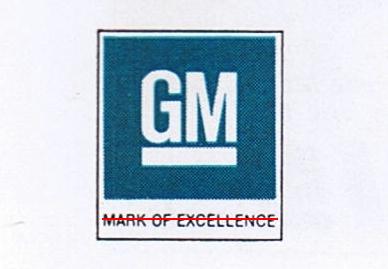
When I was a kid, I loved seeing “MARK OF EXCELLENCE” near the GM logo, because those are my initials, too.

Unfortunately, the corporate logo now represents failure and political manipulation.

gm-mark-of-non-excellence

Most Americans were opposed to the bailout of General Motors because they thought, correctly, that it was a very bad idea for the government to get so deeply involved with running a particular company. So, the recent GM statements and commercial proclaiming that the bailout loans have now been paid in full, with interest, five years ahead of schedule, seemed to be a pleasant surprise.

Apparently not.

Shikha Dalmia wrote an op-ed in Forbes explaining that what has happened is not a sign of success, but rather a prelude to another loan with worse terms for taxpayers (and only a small part of the bailout is being repaid, with
another part).

Appropriately, it seems like there are already Truth-In-Advertising concerns being raised.

I hope this bailout does end in success for the company and taxpayers, but that doesn’t seem to be the way to bet. And, if it does happen, we’ll have to find out about it from a more reliable source.

UPDATE: Here’s Nick Gillespie of Reason.TV explaining this in a short video.

Meet The New Paternalism…

I always thought “Libertarian Paternalism” was an oxymoron. So, I was happy to see that this month’s Cato Unbound is about “Slippery Slopes and the New Paternalism“. I think Glen Whitman did a great job with his lead essay, and his follow-up to Richard Thaler’s disappointing, dismissive reply.

The other replies were at least a bit more responsive to Glen’s concerns, and I hope there’s even better debate to come.

I think the issue is important, because it seems superficially attractive to “architect” choices so that people will be more likely to get what they really want. But, other than trivial examples, what’s more likely is for regulations to be based on political pull, bias, and popular nannyism. And, even paternalistic rules that do improve things when enacted are likely to remain in place (or worsened) long after the facts on the ground change so that they will inhibit people from making their best choices.

And, the slippery slope is a serious danger, and Thaler’s lack of concern about it should make the rest of us even more concerned about it.

(By the way…Comments are working again. Thanks Dale!)

UPDATE: Ilya Somin at The Volokh Conspiracy had an excellent post on the subject today; pointing out that it isn’t just the objects of “libertarian paternalism” who have cognitive biases, but so do regulators and voters!

Also, I probably shouldn’t have even mentioned slippery slopes without directing people to Eugene Volokh’s great The Mechanisms of the Slippery Slope law review article.

Policing for Plunder

The Institute for Justice has launched a nationwide campaign against civil
asset forfeiture abuse
. They’re calling it “Policing for Profit” but I would have preferred it if they didn’t use “profit” as a pejorative. There’s enough of that out there.

Civil forfeiture laws represent one of the most serious assaults on private property rights in the nation today. Under civil forfeiture, police and prosecutors can seize your car or other property, sell it and use the proceeds to fund agency budgets—all without so much as charging you with a crime. Unlike criminal forfeiture, where property is taken after its owner has been found guilty in a court of law, with civil forfeiture, owners need not be charged with or convicted of a crime to lose homes, cars, cash or other property.

Americans are supposed to be innocent until proven guilty, but civil forfeiture turns that principle on its head. With civil forfeiture, your property is guilty until you prove it innocent.

It’s really an outrageous abuse of police powers, and I’m very happy to see them addressing it.